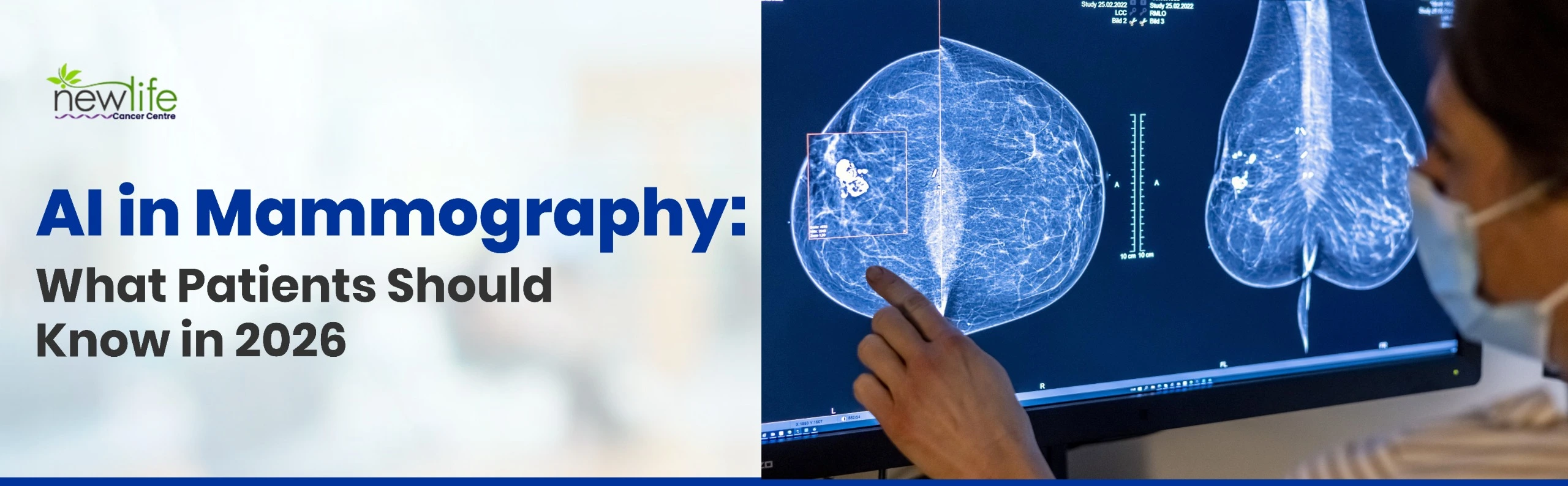
Mammography is a special form of X-ray applied to examine the breast. It is used by the doctors in the examination of changes that are not felt by the hands in the interior of the breast. Most individuals take mammograms when they are doing regular health examinations even when they are not feeling sick.
Nowadays in artificial intelligence (AI), computers are assisting physicians in reading mammograms more closely. AI does not replace doctors. Rather, it assists radiologists with highlighting regions which might require more attention.
AI will assist in pattern identification and time-saving, but not medical diagnosis. Patients still have to discuss their next steps, results and symptoms with their doctor.
We liaise with imaging experts and make sure that the information is consistent with the usage of mammography in the actual clinics.
What Is Mammography and Why It Matters
- An X-ray of the breast is also known as mammography.
- It assists physicians in viewing the interior part of the breast tissue.
- It is able to detect alterations prior to the manifestation of symptoms.
Why it matters
- The changes in the breast may be tiny and are difficult to detect at an early stage.
- Mammograms assist the doctors to design care earlier in case something appears abnormal.
- Checks early provide additional time to think of options and subsequent actions.
Screening/Diagnostic Mammogram
Screening mammogram
- Carried out when you do not have any symptoms in the breast.
- As a part of the regular health check.
- It usually takes a short time.
Diagnostic mammogram
- Performed in case of a symptom or a previous finding.
- Indicated in case of any lump, pain, discharge or recall.
- There are more images to take a closer look at.
Why early detection matters
- Early detection of changes could permit a greater number of treatment options.
- It assists physicians to coordinate care in a relaxed and gradual manner.
- Every person has varying results and this is why there is no outcome that is certain.
What Does “AI in Mammography” Mean in Real Life?
AI as a “Second Set of Eyes”
- AI scans the mammograms with computer learning.
- It uncovers the areas that appear dissimilar to standard tissue.
- These areas are inspected by the radiologist.
- The final decision and report is made by the doctor.
AI vs Traditional CAD
- The computer tools that were used long before were used to mark a lot of spots, which were not essential.
- Newer AI considers the patterns in a smarter manner.
- Not just simple rules can be learned by AI on a number of past images.
- This is capable of eliminating unnecessary marks in a few instances.
How AI-Assisted Mammography Works
Step-by-step workflow (patient-friendly)
- The trained personnel take mammogram images.
- The photos are transmitted to the computer system.
- The images are scanned and the areas are marked by AI to be reviewed.
- The radiologist analyzes the pictures and AI notations.
- Your doctor is the recipient of a final report.
What AI looks for
- Lumps or masses.
- Areas in which either side appears different.
- Calcium deposits in tiny spots.
- Alterations in normal tissues pattern.
Benefits of AI in Breast Cancer Screening
Helps spot subtle changes
- AI is capable of detecting minor differences that are difficult to realize.
- This comes in handy in instances where the changes are quite early.
Improves consistency and supports busy centers
- AI considers all images in a meticulous manner.
- This can serve high traffic screening centers.
May support earlier detection in some settings
- At certain clinics, AI can be used to accelerate reading.
- This is based on the utilization of the technology by the clinic.
Notable detail: AI can assist, but the outcome will be based on the quality of the image, working process, and the professional opinion.
Limitations and Risks Patients Should Know
AI is not 100% accurate
- AI is able to indicate non-cancerous spots (false positives).
- Something that is important might be missed by AI (false negatives).
Image quality still matters
- Proper positioning is enough to have clear images.
- Movement can blur images.
- Still a lot of importance is on good technique.
AI does not replace clinical judgement
- Physicians take into account the symptoms, examination results and past.
- AI is unaware of how you are feeling and what you are observing.
AI and Dense Breasts: What’s Different?
What dense breasts mean
- Breasts that are dense are fat-free and have more tissue.
- Thick tissue appears to be white in a mammogram.
- This may complicate the process of reading pictures.
When extra tests may be advised
- Ultrasound or MRI may be required of some individuals.
- This is determined by symptoms and level of risk.
- The option may be prescribed by your clinician.
Questions to ask your doctor if you have dense breasts
- “Do I need extra screening?”
- “What test is right for my risk?”
Who Should Consider Mammography
General guidance
- The screening is based on age and subjective risk.
- The guidelines differ depending on the country and health system.
- Time and frequency can be directed by your doctor.
Higher-risk situations
- Well established family history of breast cancer.
- Known genetic conditions.
- Previous conditions or surgery of the breast.
- Previous breast cancer.
Symptoms that need medical evaluation
- A new lump.
- Nipple discharge.
- Skin dimpling or redness.
- New nipple turning inward.
- Unilateral alterations which are permanent.
Safety note:
In case you observe symptoms, do not delay to see the screening appointment. Consultation should be sought immediately.
What to Expect During an AI-Assisted Mammogram
Before the test
- Take the instructions of your center.
- Deodorant or perfume should be avoided.
- Bring past reports/images in case you have them.
During the test
- Gentle compression is applied to the breast in a brief period.
- Compression should not be painful but it should feel uncomfortable.
- It does not take much time – just a few minutes.
After the test
- The radiologist and AI system examine images.
- The outcome can be delivered either on the same day or in the future.
- Next steps will be explained at your center in case of need.
Understanding Your Mammography Report
What “Recall” or “Call Back” means
- It implies the necessity of more images.
- It does not necessarily imply cancer.
- Most of the recalls become normal.
Common next steps after an abnormal finding
- Extra mammogram views.
- Ultrasound examination.
- Short-term follow-up imaging.
- Biopsy only if truly needed.
How to Choose a Mammography Center Using AI (Practical Checklist)
Quality and expertise indicators
- Skilled and qualified radiologists.
- Effective reporting and review.
- Comparison of images with the old ones.
- Referral to subsequent treatment on demand.
Patient experience and trust indicators
- Admiration of privacy and permission.
- Elaborate description of findings.
- Frank communication about the cost and the schedule.
The anxiety and confusion can be lowered by selecting a center which will explain the results in a clear way.
Frequently Asked Questions
Is AI mammography safe?
Yes. It involves utilization of the same images as ordinary mammography.
Are there any adverse effects on radiation exposure due to AI?
No. AI is not an additional radiation.
Will AI become a replacement for a radiologist?
No. An educated physician is the final decision-maker.
Can AI miss breast cancer?
Yes. This is why it is important for doctor review and follow-up.
Does AI decrease or maximize false positives?
It can diminish them in certain environments, although not necessarily.
Can AI be helpful with dense breasts?
It is assistive though further tests might be required.
What is the meaning of recall following a mammogram?
It implies that more images are required to be clear.
The frequency of screenings: how often?
This is based on age, risk and local guidelines.
Is AI superior to 3D mammography?
Yes, in a few, but that depends upon the clinic.
What about the case when I have the symptoms, and the screening is within the norms?
Talk to your doctor. Symptoms must never be left behind.